


How to Choose the Right Catalyst for HFO Spray Foam?
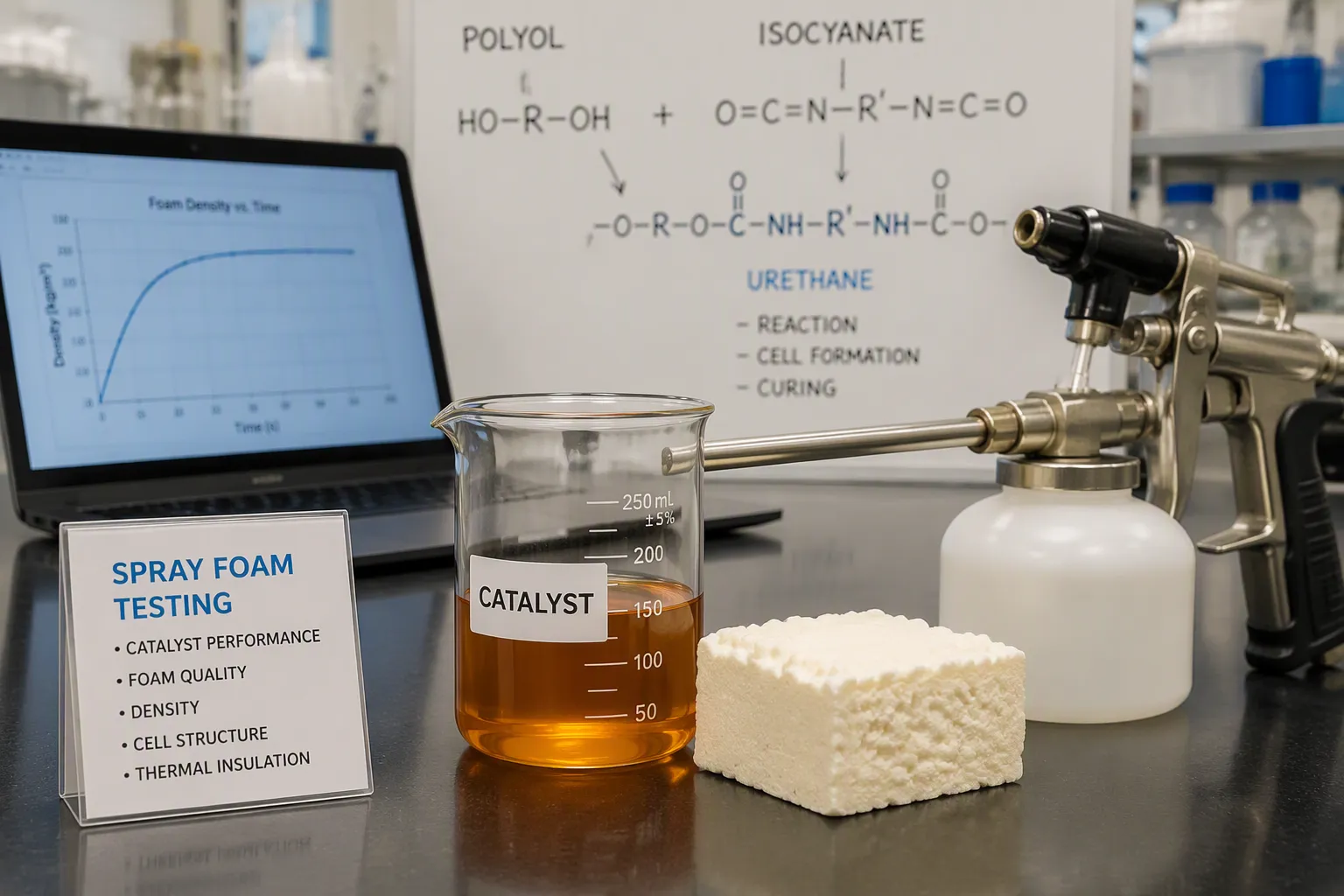
HFO blowing agents create unique challenges for spray foam systems. Their limited solubility in the polyol phase narrows the processing window significantly. A catalyst that reacts too fast leads to premature gelation and poor flow. A catalyst that reacts too slow causes foam collapse or uneven density.
MOFAN 204 directly addresses this problem. It provides a fast cream time for proper atomization and a delayed tack-free time for surface leveling. This balance ensures consistent foam quality and reliable application.
To evaluate your current catalyst, compare specific performance metrics such as cream time, gel time, and tack-free time. These criteria reveal whether your catalyst is truly optimized for HFO systems.
Key Takeaways
- ➔ HFO blowing agents need a catalyst with a balanced reaction profile. This balance ensures proper flow and prevents foam defects.
- ➔ Measure cream time, gel time, and tack-free time. These metrics show if your catalyst works well for HFO systems.
- ➔ MOFAN 204 offers a delayed action profile. This profile widens the processing window and improves foam quality.
- ➔ MOFAN 204 is low-emission and non-yellowing. These properties make it suitable for various applications.
- ➔ Run a side-by-side trial. Compare your current catalyst with MOFAN 204 to see the difference.
Why Catalyst Choice Is Critical for HFO Systems
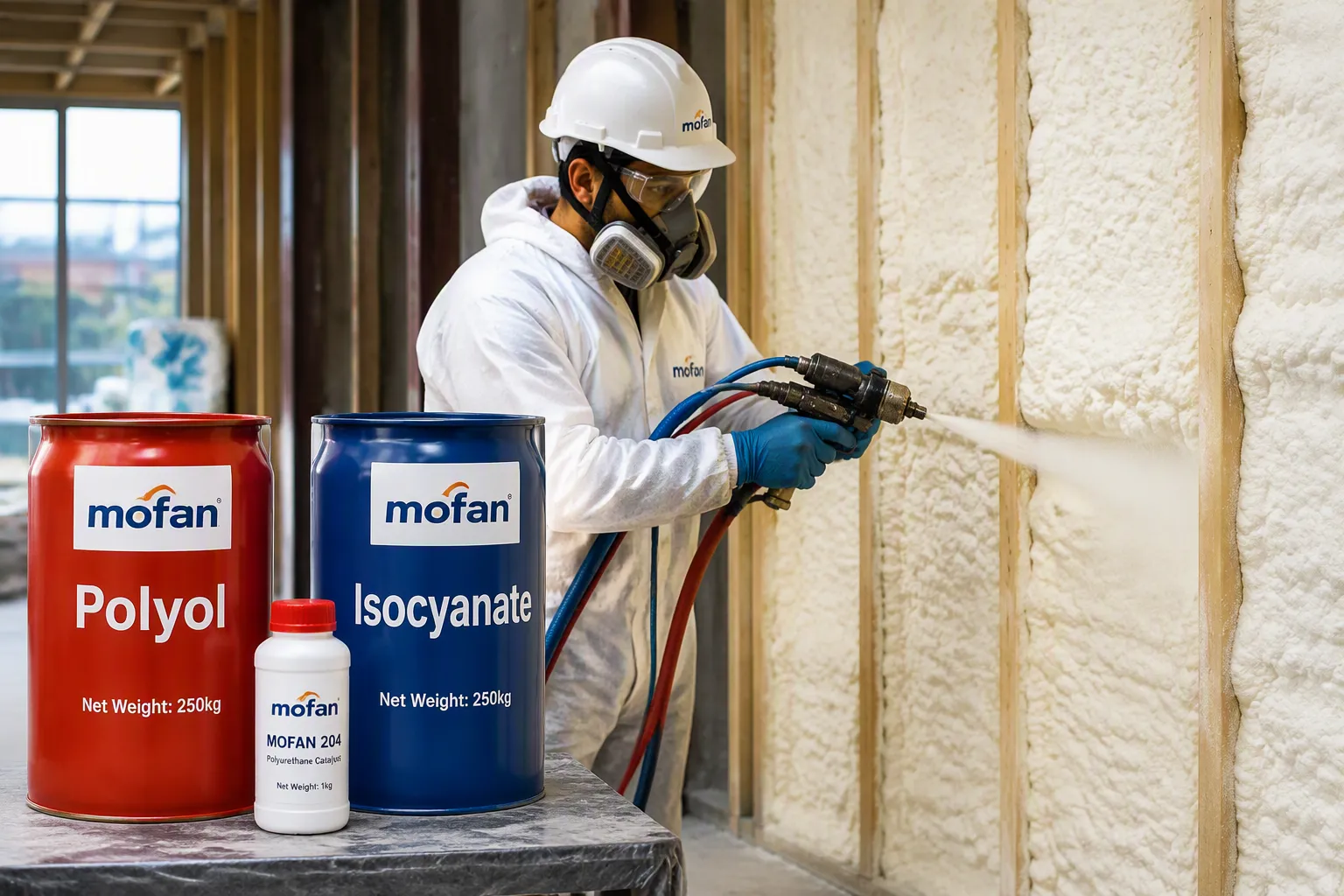
HFO blowing agents behave differently than older HCFC or HFC options. They offer lower thermal conductivity, which improves insulation performance. However, their solubility parameters differ from traditional blowing agents. This difference means HFOs do not dissolve as readily in the polyol phase. The result is a tighter catalysis window. Small changes in reactivity produce large shifts in foam quality.
Reactivity and the HFO Solubility Challenge
The solubility mismatch creates a narrow processing range. A catalyst with high reactivity accelerates the gel reaction too quickly. The foam begins to set before the mixture spreads across the substrate. This condition produces poor cell structure, surface voids, or even foam shrinkage. These defects directly reduce the insulation R-value and weaken adhesion to the surface.
A catalyst with insufficient reactivity creates the opposite problem. The foam rises too slowly, allowing gas to escape before the polymer network forms. Foam collapse or density gradients follow. Both scenarios waste material and require costly rework.
MOFAN 204 addresses these HFO-specific challenges through its balanced catalytic activity. It promotes the polyisocyanurate reaction and the gel reaction at a controlled rate. This product serves as a direct replacement for competitor grade 204, offering consistent performance without reformulation guesswork.
Viscosity and Mixing Dynamics
Polyol viscosity plays a major role in how well the catalyst and blowing agent mix. Higher viscosity blends require more energy to achieve uniform dispersion. Poor mixing creates irregular cell structures and weak spots in the foam matrix.
The table below shows how viscosity conditions influence mixing system choices and final foam quality.
| Polyol Viscosity Condition | Mixing System Used | Resulting Foam Cell Structure |
|---|---|---|
| >10,000 cP (highly viscous) | Two-stage system: static mixer (helical elements) followed by dynamic gear pump or disc mixer | Fine-cell foam with average cell diameter |
| ≥5,000 cP (at 25°C, ASTM D445) with ≥10 wt% amine-initiated polyols (hydroxyl number 400–800 mg KOH/g) | Not specified (relies on rapid gelation and high crosslink density from amine-initiated polyols) | Low-density foam |
Key Performance Criteria for HFO Catalysts
Applicators need clear measurements to judge a catalyst. Three timing values matter most: cream time, gel time, and tack-free time. These numbers define the working window for every spray foam application.
Cream Time and Gel Time: Defining the Window
Cream time measures the seconds between chemical mixing and visible foam expansion. The mixture changes from liquid to a creamy, light-colored state. This transition signals the start of gas generation. For HFO spray foam, the ideal cream time falls between 2 and 4 seconds.
Rise Profile and Tack-Free Time
Rise profile describes how foam height changes over time. Tack-free time measures how long the foam surface remains sticky. The ideal tack-free time for HFO spray foam ranges from 15 to 25 seconds.
How MOFAN 204 Meets HFO Performance Criteria
Delayed Action for Superior Flow and Density
The delayed action profile of MOFAN 204 creates a distinct advantage during application. The catalyst initiates the reaction promptly. However, it slows the gelation phase. This timing allows the foam mixture to spread across the substrate before the polymer network locks into place.
Comparing MOFAN 204 to Common Alternatives
MOFAN 204 vs. Standard Amine Catalysts
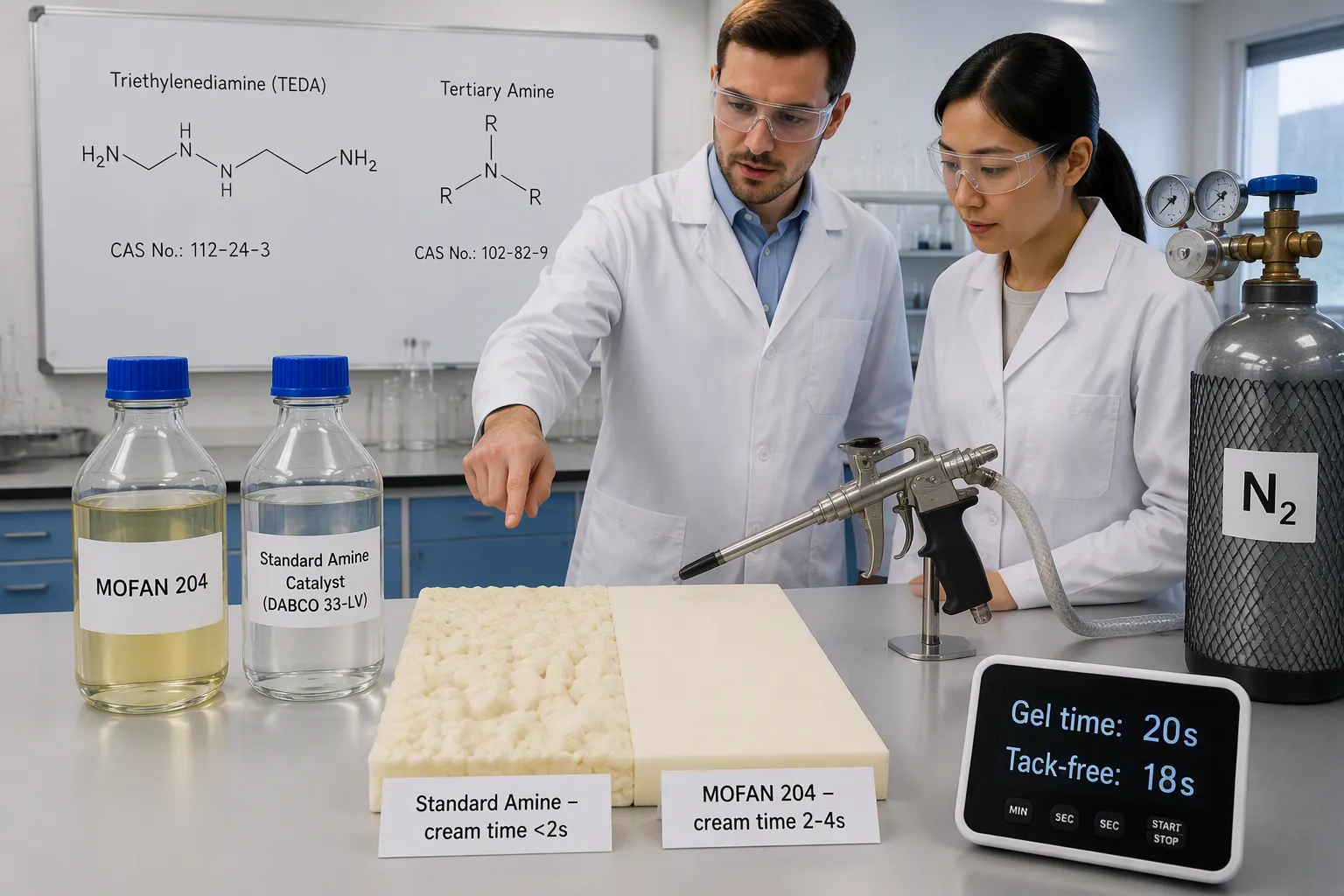
Standard amine catalysts like 5 and 33-LV have served the polyurethane industry for decades. These products contain triethylenediamine as their active ingredient. They deliver strong catalytic activity across many foam formulations. Their performance in HFO spray foam systems, however, reveals significant limitations.
Triethylenediamine accelerates both the gel reaction and the blowing reaction aggressively. This high reactivity shortens cream time dramatically. Applicators often measure cream times below two seconds with these catalysts. The mixture begins expanding before it leaves the spray gun pattern. Poor flow follows. The foam sets in uneven layers with visible surface defects.
The chemistry explains this behavior. Standard amine catalysts lack the molecular structure needed to moderate their activity. They drive the polyol-isocyanate reaction at nearly maximum speed from the moment of contact. HFO blowing agents, with their limited solubility in the polyol phase, cannot accommodate this rapid gelation. The narrow processing window closes almost immediately.
MOFAN 204 takes a different approach. Its tertiary amine structure dissolves in an alcohol solvent. This combination produces a more balanced catalytic activity. The catalyst promotes the polyisocyanurate (trimer) reaction and the polyol-isocyanate (gel) reaction at a controlled rate. Neither reaction dominates the other. The foam rises steadily without premature locking.
The practical difference appears in the timing values. A typical HFO system with MOFAN 204 achieves a cream time of 2 to 4 seconds. The gel time extends sufficiently to allow proper substrate wet-out. The tack-free time lands in the 15 to 25 second range. These numbers create a workable processing window. Applicators can build multiple passes without fighting the material.
| Property | Standard Amine Catalysts | MOFAN 204 |
|---|---|---|
| Active chemistry | Triethylenediamine | Tertiary amine in alcohol solvent |
| Cream time in HFO systems | Often below 2 seconds | 2 to 4 seconds |
| Reaction control | Aggressive, unbalanced | Balanced trimer and gel activity |
| Suitability for HFO | Poor flow, surface defects | Consistent density, good flow |
Practical Tips for Job-Site Success
Field performance depends on more than catalyst chemistry. Proper handling procedures make the difference between success and failure. Follow these practices to get consistent results with any HFO catalyst system.
- Pre-mix the catalyst thoroughly with the polyol before spraying.
- Monitor material temperature closely (ideal: 70–80°F).
- Watch for shifts in cream time during operation.
- Adjust spray pressure in increments of 100–200 psi to fine-tune performance.
FAQ
Can I use MOFAN 204 with my existing polyol blend?
Yes. MOFAN 204 works as a direct replacement for competitor grade 204. It blends completely with water because of its full water solubility. Pre-mix it thoroughly with your polyol before spraying.
How do I know if my current catalyst needs replacement?
Measure your cream time, gel time, and tack-free time. HFO systems should show a cream time of 2 to 4 seconds and a tack-free time of 15 to 25 seconds. Values outside these ranges indicate poor flow or foam collapse.
What storage conditions does MOFAN 204 require?
Store MOFAN 204 in a cool, dry, well-ventilated area. Keep it away from heat and open flames. The product maintains activity for at least six months in a polyol premix when stored under dry nitrogen.
Does MOFAN 204 work for applications beyond spray foam?
Yes. MOFAN 204 suits water-blown systems and low-density formulations. It also works in polyurethane adhesives for food packaging. After full cure, residual amine extractables stay below 5 parts per million.
Post time: Sep-09-2026