


How to Choose the Right Polyurethane Metal Catalyst for Your Application
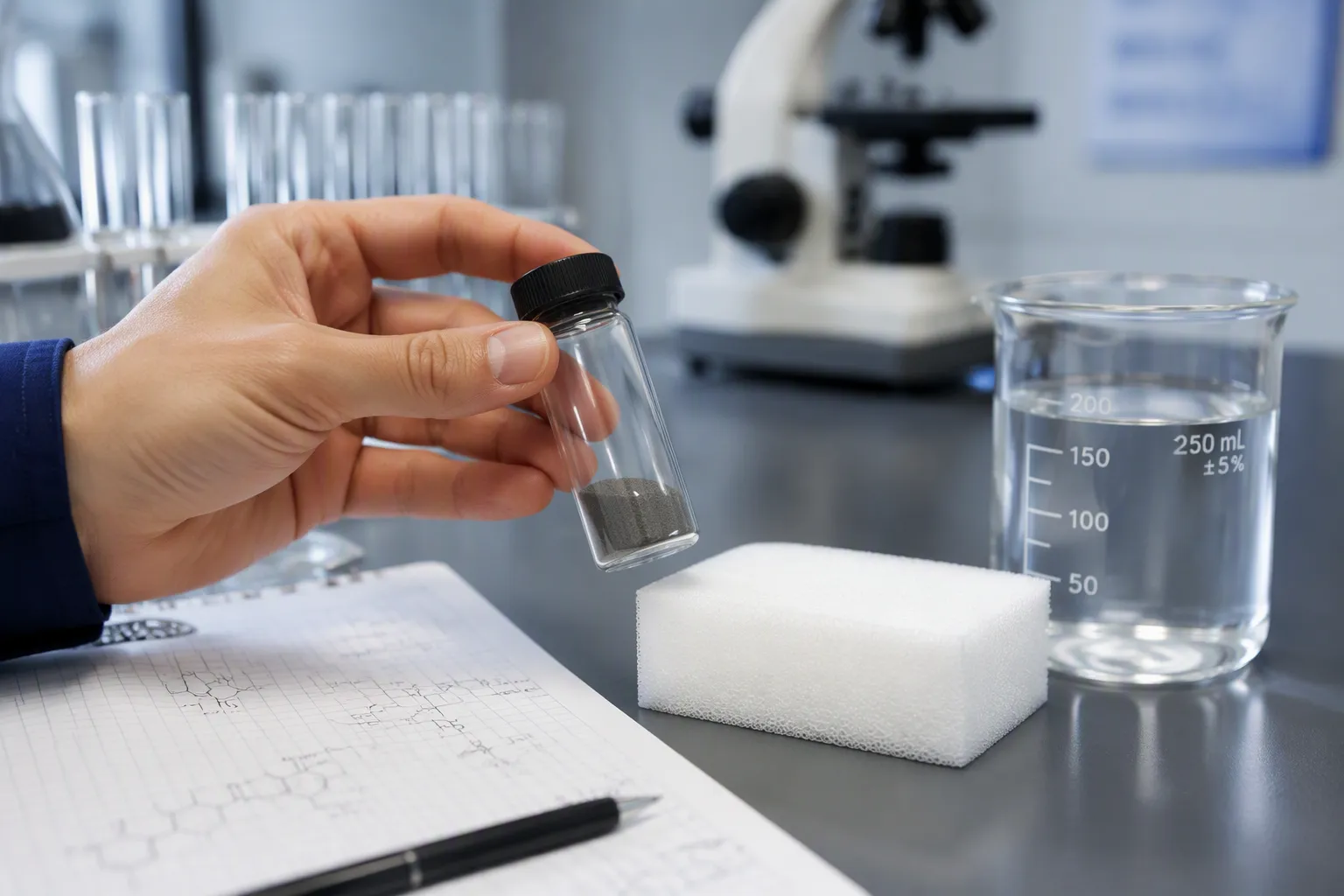
Are you trying to balance reactivity and pot life, or deciding between a tin and bismuth catalyst for your polyurethane system? The right catalyst choice is critical for achieving desired foam properties, processing efficiency, and regulatory compliance. This blog will guide you through understanding catalyst types, key selection criteria, and a systematic selection process. Our polyurethane metal catalyst offers high activity and low volatility, minimizing emissions and improving workplace safety. This ensures consistent batch quality and enhanced end-product performance. Selecting the correct polyurethane catalyst ensures optimal performance in your specific application. The right polyurethane can transform your production efficiency. Polyurethane systems require careful evaluation of these factors.
Key Takeaways
-
Match catalyst type to your application’s needs, like balancing reactivity with pot life.
-
Consider regulatory and environmental factors, especially for EU markets.
-
Test catalysts with your full formulation to see how they interact with other additives.
-
Use small-scale trials to find the right catalyst dosage and processing window.
-
Partner with a supplier for technical support and tailored recommendations.
Types of Polyurethane Metal Catalysts and Their Roles
Organotin and Alternative Metal Catalysts
Organotin compounds such as dibutyltin dilaurate (DBTDL) and dioctyltin dilaurate (DOTL) serve as reliable performers in polyurethane production. These catalysts primarily promote the resinification (gel) reaction between isocyanates and polyols. This distinction matters because amine catalysts accelerate the blowing reaction that creates foam structure. Metal catalysts, by contrast, build the polymer network that delivers mechanical strength and dimensional stability.
The regulatory landscape, however, continues shifting. Organotin compounds face increasing restrictions due to their high toxicity and environmental persistence. Bismuth carboxylates have emerged as lower-toxicity alternatives with a more favorable regulatory profile. The comparison below illustrates these differences:
|
Property |
Bismuth Catalysts |
Organotin Catalysts (e.g., DBTDL) |
|---|---|---|
|
Toxicity |
Low |
High |
|
Environmental Impact |
Low |
High |
|
Regulatory Status |
Increasingly accepted |
Increasingly restricted |
Formulators in sensitive markets, particularly those exporting to the EU, must weigh these factors carefully. A high-quality polyurethane metal catalyst offers high activity and low volatility, minimizing emissions during processing. These products also demonstrate excellent compatibility with amine catalysts, allowing manufacturers to achieve a balanced reaction profile.
Applications of Polyurethane Catalysts in Common Foam Systems
The applications of polyurethane catalysts span flexible foams, rigid insulation panels, microcellular elastomers, and spray coatings. Each system demands a specific reactivity window. Rigid foam systems, for instance, typically require precise control over cream time and rise profile to ensure proper filling of complex molds.
Catalyst loading levels vary considerably across different types of polyurethane systems. The table below shows typical ranges for rigid foam formulations:
|
Catalyst Type |
Loading Level (pphp) |
|---|---|
|
Reactive amine catalysts |
0.01 – 1.3 |
|
Non-reactive tertiary amine catalysts |
0.01 – 0.20 |
|
Organometallic (e.g., dibutyltin dilaurate) |
0.05 – 0.3 |
These numbers demonstrate why understanding the types of polyurethane catalysts matters for formulation success. Selecting the correct catalyst type and dosage directly influences processing efficiency and final product quality. The benefits of using polyurethane catalysts include precise control over reaction rates and consistent batch-to-batch performance.
Understanding the types of polyurethane catalysts available helps manufacturers match catalyst activity to their specific production equipment and throughput targets. Whether producing high-resilience foams or rigid insulation, the right metal catalyst ensures optimal cure profiles and end-product reliability across diverse applications.
Key Selection Criteria for Polyurethane Catalyst Applications
Balancing Reactivity, Selectivity, and Pot Life
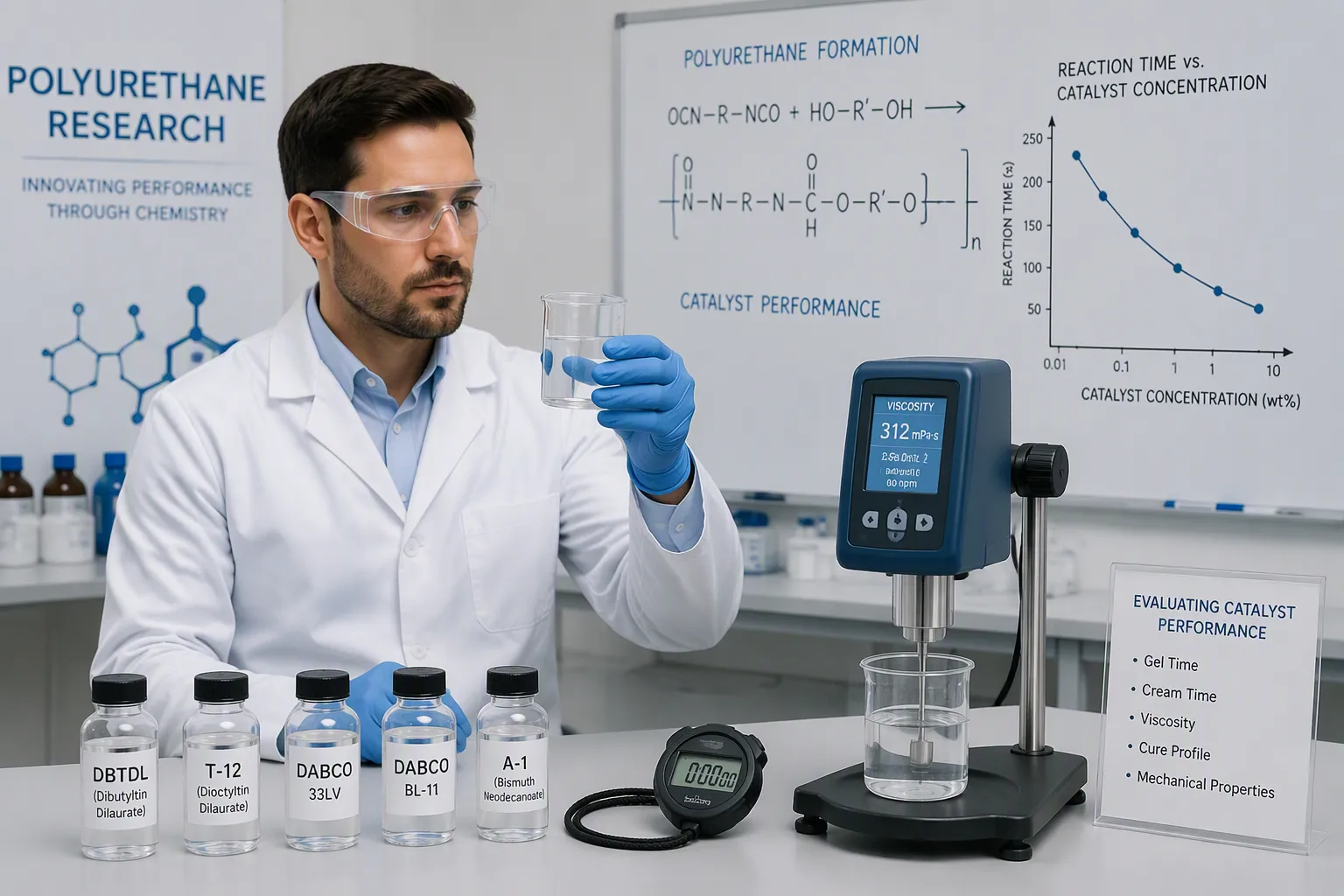
Reactivity determines how quickly the polyurethane system cures after mixing. Selectivity describes whether the catalyst favors the gel reaction or the blowing reaction. Pot life represents the working time available before the mixture becomes too viscous to process. These three parameters form an interdependent triangle. Adjusting one factor inevitably shifts the others.
Organotin catalysts demonstrate particularly strong influence over gel time. The relationship follows a clear pattern: higher catalyst concentration produces shorter gel times. A formulation using dibutyltin dilaurate at elevated loading will cure noticeably faster than the same system at reduced loading. This inverse relationship gives manufacturers precise control over product quality. However, aggressive reactivity reduces pot life. Production lines with extended dwell times or complex mold geometries require slower systems. Conversely, high-throughput operations benefit from faster cure cycles.
The balance between reactivity and pot life depends on the specific polyurethane application. Rigid foam spraying demands rapid cure to prevent sagging on vertical surfaces. Cast elastomers require longer pot life to fill intricate molds completely. Flexible foam producers often seek intermediate profiles that allow adequate flow before expansion begins. Each scenario demands a different catalyst selection based on product requirements.
Temperature sensitivity adds another layer of complexity. Some catalysts exhibit pronounced activity changes with temperature fluctuations. A system tuned for ambient conditions may cure too slowly in cooler environments or too rapidly in warmer facilities. Manufacturers must evaluate their processing environment alongside catalyst chemistry.
Compatibility with Raw Materials and End-Use Requirements
Catalyst compatibility extends beyond simple solubility in polyol blends. The catalyst must perform consistently across the entire formulation. Polyester polyols behave differently from polyether polyols. Filled systems introduce solid particles that may adsorb catalyst molecules. Moisture content varies between batches and influences isocyanate reactions. Each variable affects catalyst performance.
Thermal resistance represents a critical selection factor. Polyurethane systems exposed to elevated service temperatures require catalysts that maintain stability without degrading or migrating. Catalysts with low volatility minimize emissions during both processing and end-use. This property proves essential for automotive interior applications where fogging concerns dominate. A low-odor polyurethane catalyst reduces workplace exposure concerns and satisfies stringent indoor air quality requirements.
Flexibility versus rigidity determines appropriate catalyst chemistry. Rigid foam applications benefit from catalysts that promote extensive crosslinking. Flexible foam systems require catalysts that allow polymer chains to remain mobile. The catalyst choice directly influences mechanical properties including compression strength, resilience, and dimensional stability.
End-use requirements often dictate additional constraints. Food contact applications demand catalysts with appropriate regulatory approvals. Medical devices require materials with proven biocompatibility. Construction materials must meet specific flame retardance standards. Each regulatory framework narrows the field of acceptable catalyst options.
Manufacturers should select low-odor catalysts when producing consumer goods destined for enclosed spaces. Mattresses, furniture cushioning, and vehicle seating all benefit from reduced volatile emissions. These applications demonstrate why catalyst selection based on product requirements must consider the complete product lifecycle.
Quality assurance programs provide essential support during catalyst evaluation. Reputable suppliers maintain strict batch-to-batch consistency through comprehensive testing protocols. Technical support teams assist formulators in adjusting catalyst levels to achieve target processing windows. This partnership approach helps manufacturers optimize polyurethane systems efficiently while maintaining consistent output quality across production runs.
Polyurethane systems vary widely in their sensitivity to catalyst variations. Some formulations tolerate moderate dosage fluctuations without noticeable effects. Others exhibit narrow processing windows where minor changes produce defective parts. Understanding this sensitivity helps formulators establish appropriate quality control measures and supplier qualification criteria.
Step-by-Step Process for Selecting a Polyurethane Metal Catalyst
Define Your Application Needs and Performance Targets
The selection process begins with a clear definition of your production goals. Every polyurethane system serves a distinct purpose. A rigid insulation panel demands different cure characteristics than a flexible foam cushion. Write down your target processing parameters before evaluating any catalyst options.
Start with the physical properties your final product must deliver. Compression strength, density, and dimensional stability all trace back to catalyst chemistry. Consider your production equipment as well. A high-pressure dispensing machine operates within a fixed throughput range. Your catalyst choice must match that equipment’s capabilities.
Document your required pot life and demold time. These two parameters define the processing window. A longer pot life suits complex mold geometries. A shorter demold time increases production throughput. The balance between these factors shapes your catalyst selection.
Temperature conditions at your facility matter considerably. Ambient temperature fluctuations shift reaction kinetics. A catalyst that performs well in a climate-controlled laboratory may behave differently on a factory floor. Account for seasonal variations in your facility.
Regulatory constraints narrow the field of acceptable options. Markets in the European Union impose strict limits on organotin compounds. Consumer product applications demand low-odor solutions. Each constraint eliminates certain catalyst families from consideration.
Define your application-specific performance requirements in writing. Include target values for cream time, gel time, and tack-free time. Specify acceptable ranges for each parameter. These numbers become your benchmark for evaluating catalyst options.
Evaluate Catalyst Options Through Data and Testing
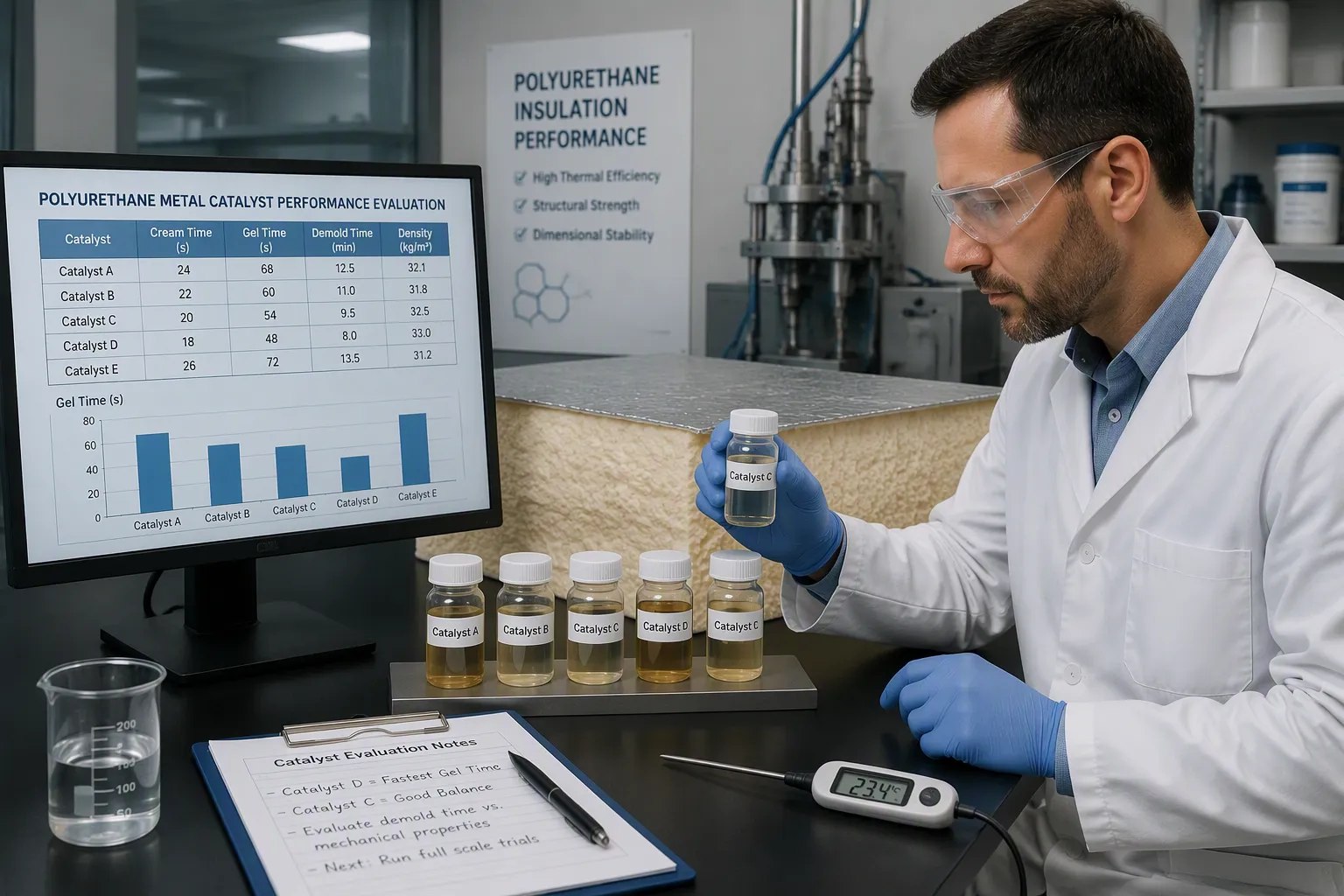
Once you establish performance targets, screen candidate catalysts against published specifications. Compare activity levels, metal content, and solubility data from technical datasheets. Shortlist two or three candidates that match your reactivity requirements.
Small-scale trials provide the most reliable data for catalyst selection. Prepare test formulations using your actual polyol and isocyanate components. Run each candidate through identical mixing and dispensing conditions. Measure rise profiles and cure times precisely.
Evaluate the rise profile carefully. A proper rise curve shows foam height against elapsed time. Compare the shape of each curve against your target profile. Look for smooth, consistent expansion without collapse or excessive settling.
Cure profiles reveal how the polymer network develops over time. Track hardness development at regular intervals after demolding. A catalyst that produces a slow initial cure may still reach full properties eventually. Determine whether that timeline fits your production schedule.
Sensitivity analysis provides valuable insight into catalyst robustness. This statistical method examines how performance varies with changing input conditions. Feedstock quality often fluctuates between shipments. A catalyst that performs consistently despite these variations offers greater production reliability. The analysis identifies which catalyst properties remain stable under different raw material conditions.
Document every trial result systematically. Record temperature, humidity, and raw material batch numbers for each test. This documentation helps identify variables that influence catalyst performance. It also supports troubleshooting when production issues arise later.
Technical support from your catalyst supplier accelerates the evaluation process. Experienced formulators can recommend starting concentrations based on your target profile. They can also suggest adjustments when trial results deviate from expectations. This partnership reduces the number of experimental iterations needed.
Scale-up testing follows successful small-scale trials. Run the selected catalyst through your actual production line. Verify that performance translates from laboratory conditions to full-scale operation. Monitor early production batches closely for any deviations from expected behavior.
The data gathered during this evaluation phase guides your final decision. Choose the catalyst that meets your application-specific performance requirements with the widest processing margin. A catalyst with a broader operating window provides greater tolerance for minor formulation variations. This flexibility protects your polyurethane production from unexpected disruptions.
Common Pitfalls in Polyurethane Catalyst Selection for Different Applications
Overlooking Regulatory and Environmental Constraints
Many formulators focus exclusively on processing parameters during catalyst selection. They evaluate reactivity, pot life, and final mechanical properties. Regulatory compliance often receives attention only after production begins. This oversight creates costly reformulation delays and market access barriers.
The European Union maintains strict restrictions on organotin compounds. These regulations affect any manufacturer exporting finished goods into EU markets. Automotive interior components, furniture, and bedding products face particular scrutiny. Buyers increasingly demand documentation proving compliance with low-emission standards. A catalyst that performs well in the lab but fails regulatory review cannot support commercial production.
Volatility directly impacts workplace safety and environmental performance. High-volatility catalysts release compounds during processing. These emissions require additional ventilation infrastructure and personal protective equipment. End products may continue releasing volatile compounds for extended periods. This off-gassing creates odor complaints from consumers and fails indoor air quality certifications.
Selecting a low-odor polyurethane catalyst addresses these concerns proactively. Products with low volatility minimize emissions during both processing and end-use. This characteristic proves essential for automotive interiors where fogging concerns dominate. A low-odor polyurethane catalyst also simplifies compliance with increasingly stringent building material certifications. Manufacturers who evaluate regulatory requirements early avoid expensive reformulation efforts later.
Ignoring Synergistic Effects with Other Additives
Catalysts rarely work alone in a polyurethane formulation. Most systems combine metal catalysts with amine catalysts to balance gel and blowing reactions. The interaction between these components produces effects that neither catalyst achieves independently. Formulators who ignore these synergistic relationships risk unpredictable processing behavior.
The cream time data below demonstrates this interaction clearly:
|
Catalyst system |
Cream time (s) |
|---|---|
|
Amine catalyst only |
10 |
|
Amine + bismuth catalyst |
12 |
Adding a bismuth metal catalyst to an amine system extends cream time. This delay provides additional working time for mold filling and component placement. The combined system behaves differently than either catalyst alone. Formulators must test complete catalyst packages rather than evaluating components separately.
Similar synergistic effects appear with tin-based catalysts. A formulation using only a tin catalyst exhibits one reactivity profile. Adding an amine catalyst shifts that profile substantially. The combined effect depends on the specific ratio between catalyst types. Small adjustments to this ratio produce significant changes in rise and cure behavior.
Surfactants, flame retardants, and fillers also interact with catalyst systems. These additives may adsorb catalyst molecules or alter reaction kinetics. A formulation that performs well in simple polyol blends may behave differently with filled systems. Comprehensive testing with all formulation components prevents unpleasant surprises during scale-up.
Technical support from catalyst suppliers helps navigate these complex interactions. Experienced formulators can predict how a new catalyst will behave alongside existing additives. They recommend starting concentrations based on your target processing window. This guidance reduces trial-and-error iterations and accelerates formulation development. The right polyurethane catalyst selection considers the complete formulation, not just isolated components.
Selecting the right polyurethane metal catalyst demands a systematic approach that balances chemistry, application demands, and regulatory compliance. The step-by-step process outlined here—defining performance targets, evaluating options through data, and testing—provides a reliable path forward. This method prevents costly reformulation delays and ensures consistent production outcomes.
Every formulation presents unique challenges. A polyurethane system that performs well in one facility may fail in another due to temperature variations or raw material differences. Partnering with an experienced supplier accelerates this journey. Their technical expertise helps you navigate complex interactions and achieve high-quality polyurethane materials efficiently.
Begin with small-scale trials today. Contact our product team for personalized recommendations tailored to your specific processing conditions and performance goals.
FAQ
What is the difference between tin and bismuth catalysts in polyurethane systems?
Tin catalysts, such as DBTDL, offer high activity but face increasing regulatory restrictions. Bismuth catalysts provide lower toxicity and a more favorable environmental profile. Your choice depends on the application’s compliance requirements and desired processing window.
How do I balance reactivity and pot life when selecting a catalyst?
Reactivity and pot life are inversely related. Higher catalyst concentration shortens gel time but reduces working time. Adjust dosage based on your production equipment and mold complexity. Small-scale trials help identify the optimal balance for your specific system.
Why is low volatility important in a polyurethane catalyst?
Low volatility minimizes emissions during processing and in the final product. This reduces workplace exposure concerns and helps meet stringent indoor air quality standards. It is especially critical for automotive interiors, furniture, and other consumer goods destined for enclosed spaces.
How do metal catalysts interact with amine catalysts in a formulation?
Metal catalysts primarily promote the gel reaction, while amine catalysts accelerate the blowing reaction. Combining them allows precise control over foam rise and cure profiles. The synergistic effect varies with the ratio and must be tested using the complete formulation under actual production conditions.
Post time: Sep-03-2026