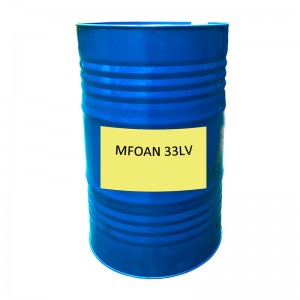
MOFAN

products

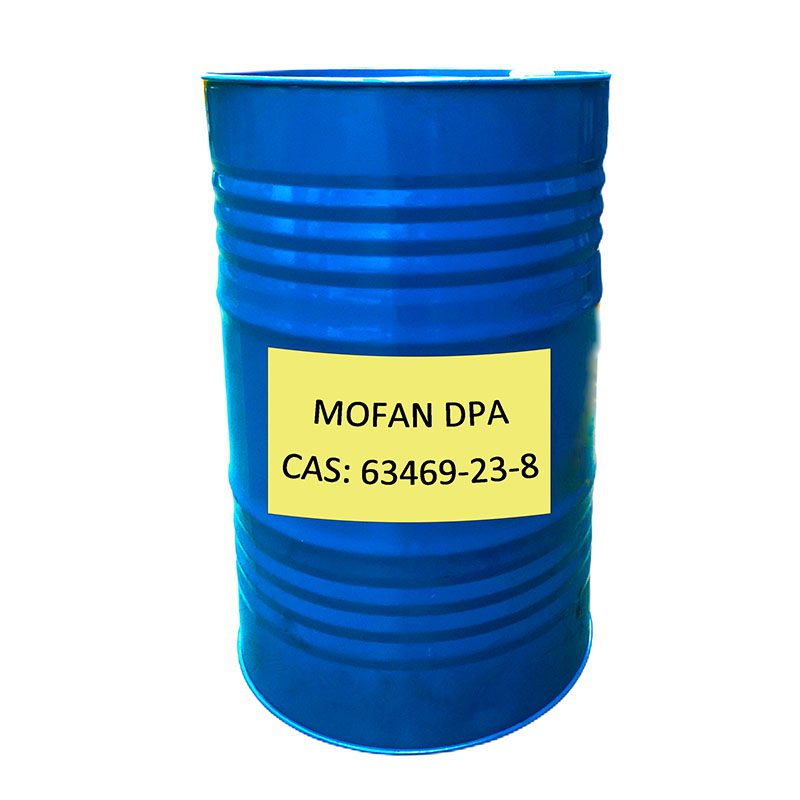
N-(3-Dimethylaminopropyl)-N,N-diisopropanolamine Cas# 63469-23-8 DPA

  • MOFAN Grade: MOFAN DPA
  • Competitor Brand: JEFFCAT DPA by Huntsman,TOYOCAT RX4 by TOSOH,DPA
  • Chemical name: N-(3-Dimethylaminopropyl)-N,N-diisopropanolamine; 1,1'-[[3-(dimethylamino)propyl]imino]bispropan-2-ol; 1-{[3-(dimethylamino)propyl](2-hydroxypropyl)amino}propan-2-ol
  • Cas Number: 63469-23-8
  • Molecular fomula: C11H26N2O2
  • Molecular weight: 218.34
  • Product Detail

    Product Tags

    Description

    MOFAN DPA is a blowing polyurethane catalyst based on N,N,N'-trimethylaminoethylethanolamine.  MOFAN DPA is suitable for use in producing molded flexible, semi-rigid, and rigid polyurethane foam. In addition to promoting the blowing reaction, MOFAN DPA also promotes the crosslinking reaction between isocyanate groups.

    Application

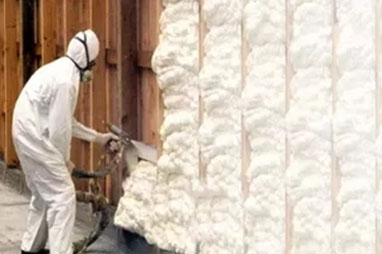
    MOFAN DPA is used in molded flexible, semi-rigid foam, rigid foam etc.
    MOFANCAT T003
    MOFANCAT T002
    MOFANCAT T001

    Typical Properties

    Apperance,25℃ light yellow transparent liquid
    Viscosity, 20℃,cst 194.3
    Density,25℃,g/ml 0.94
    Flash point, PMCC, ℃ 135
    Solubility in water Soluble
    Hydroxyl value, mgKOH/g 513

    Commercial specification

    Apperance,25℃ Colorless to light yellow transparent liquid
    Content % 98 min.
    Water content % 0.50 max

    Package

     180 kg / drum or according to customer needs.

    Hazard statements

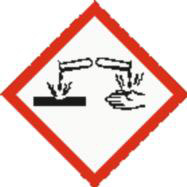
    H314: Causes severe skin burns and eye damage.
    Label elements

    2

     Pictograms

    Signal word Danger
    UN number 2735
    Class 8
    Proper shipping name and description AMINES, LIQUID, CORROSIVE, N.O.S.
    Chemical name 1,1'-[[3-(DIMETHYLAMINO)PROPYL]IMINO]BIS(2-PROPANOL)

    Handling and storage

    Precautions for safe handling
    Advice on safe handling : Do not breathe vapours/dust.
    Avoid contact with skin and eyes.
    Smoking, eating and drinking should be prohibited in the application area.
    To avoid spills during handling keep bottle on a metal tray.
    Dispose of rinse water in accordance with local and national regulations.

    Advice on protection against fire and explosion
    Normal measures for preventive fire protection.

    Hygiene measures
    When using do not eat or drink. When using do not smoke.
    Wash hands before breaks and at the end of workday

    Requirements for storage areas and containers
    Keep container tightly closed in a dry and well-ventilated place. Containers which are opened must be carefully resealed and kept upright to prevent leakage. Observe label precautions. Keep in properly labelled containers.

    Advice on common storage 
    Do not store near acids.

    Further information on storage stability
    Stable under normal conditions

    FAQ

    I produce low-odor waterborne polyurethane coatings. How can DPA help?

    DPA is a low-odor, reactive amine that reduces amine smell during application and after film formation.

    My polyurethane elastomer has poor tear strength. Can DPA improve it?

    Yes, its diisopropanolamine structure can increase crosslink density and tear resistance when used at 0.2–0.5 phr.

    What is the typical dosage for DPA in a polyurethane sealant to improve adhesion to concrete?

    0.3–0.6 phr; it enhances wetting and chemical bonding to mineral surfaces.

    Can DPA be used as a co-catalyst in polyurethane spray foams to reduce odor?

    Yes, it helps lower the overall amine volatility; often blended with MOFAN 33LV.

    My polyurethane adhesive for PVC has poor heat resistance. How to improve?

    Add DPA (0.4 phr) to increase the crosslinking density, raising the heat deflection temperature.

    Is DPA compatible with moisture-cure systems?

    It can be used, but because it contains OH groups, it will react with isocyanate. Use in two-component systems only.

    How does DPA compare to triethanolamine (TEOA) as a crosslinker?

    DPA is a better catalyst and milder crosslinker; TEOA is mainly a crosslinker with weak catalytic activity.

    My polyurethane foam for packaging has a slow recovery after compression. Can DPA fix this?

    Yes, increase DPA to 0.2–0.3 phr to enhance the elastic network formation.

    Can DPA be used in epoxy systems to improve flexibility?

    Yes, as a modifier it can reduce brittleness without slowing the cure.

    What is the shelf life of a polyol blend containing DPA?

    At least 6 months when stored in a dry, sealed container.


  • Previous:
  • Next:

  • Write your message here and send it to us

    Leave Your Message