MOFAN

products

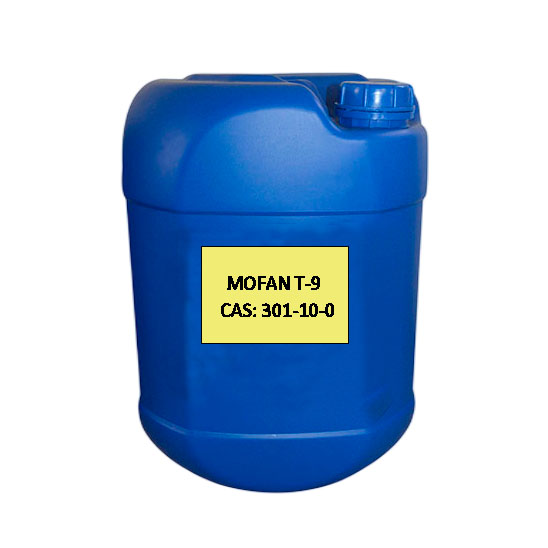
Stannous octoate, MOFAN T-9

  • MOFAN Grade: MOFAN T-9
  • Similar to: T 9, T10, T16, T26; Fascat 2003; Neostann U 28; D 19; Stanoct T 90;
  • Chemical name: Stannous octoate
  • Cas Number: 301-10-0
  • Molecular fomula: C16H30O4Sn
  • Molecular weight: 405.12
  • Product Detail

    Product Tags

    Description

    MOFAN T-9 is a strong, metal-based urethane catalyst that is primarily used in flexible slabstock polyurethane foams.

    Application

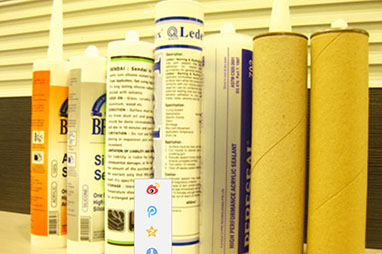
    MOFAN T-9 is recommended for use in flexible slabstock polyether foams. It is also used successfully as a catalyst for polyurethane coatings and sealants.

    MOFAN DMAEE02
    MOFAN A-9903
    MOFAN DMDEE4

    Typical Properties

    Appearance Light yellow  liqiud
    Flash Point, °C (PMCC) 138
    Viscosity @ 25 °C mPa*s1 250
    Specific Gravity @ 25 °C (g/cm3) 1.25
    Water Solubility Insoluble
    Calculated OH Number (mgKOH/g) 0

    Commercial specification

    Tin content (Sn), % 28Min.
    Stannous tin content %wt 27.85 Min.

    Package

    25kg/drum or according to customer needs.

    Hazard statements

    H412: Harmful to aquatic life with long lasting effects.

    H318: Causes serious eye damage.

    H317: May cause an allergic skin reaction.

    H361: Suspected of damaging fertility or the unborn child <state specific effect if known> <state route of exposure if it is conclusively proven that no other routes of exposure cause the hazard>.

    Label elements

    MOFAN T-93

     Pictograms

    Signal word  Danger
    Not regulated as dangerous goods.

    Handling and storage

    Precautions for safe handling:  Avoid contact with eyes, skin and clothing. Wash thoroughly after handling. Keep container tightly closed. Vapors can be evolved when material is heated during processing operations. See Exposure Controls/Personal Protection, for types of ventilation required. May cause sensitisation of susceptible persons by skin contact. See personal protection information.

    Conditions for safe storage, including any incompatibilities: Keep in a dry, cool and well-ventilated place. Keep container tightly closed.

    Improper disposal or re-use of this container may be dangerous and illegal. Refer to applicable local, state and federal regulations.

    FAQ

    I manufacture flexible polyurethane slabstock foam and need a standard tin catalyst. What dosage of T-9 is typical?

    0.15–0.35 phr (based on polyol) for standard density (20–25 kg/m³) foam; adjust for water level.

    My foam has a tendency to scorch in hot summer. Can I reduce T-9 to prevent scorch?

    Yes, lower to 0.10–0.18 phr and compensate with a slightly higher amine catalyst; also add an antioxidant.

    Can T-9 be used in polyurethane coatings for wood flooring to speed up hardness development?

    Yes, at 0.02–0.05% on total resin; it promotes faster tack-free time.

    My elastomer parts have a rough surface due to premature gelation. How to fix?

    Replace T-9 with a milder tin catalyst like T-120, or reduce T-9 to below 0.05 phr.

    What is the typical tin content of MOFAN T-9?

    Approximately 28% tin (as Sn²⁺); it is a viscous liquid.

    Is T-9 sensitive to moisture?

    Yes, highly sensitive; always store under dry nitrogen and use dry polyols (<0.05% water).

    My flexible foam has low tear strength. Can increasing T-9 help?

    Only if the current tin level is very low (<0.1 phr); increase to 0.25 phr may improve tear by 10–15%.

    Does T-9 cause discoloration in white or pastel foams?

    Stannous tin can oxidize to stannic, causing yellowing; use a chelator (e.g., citric acid) to stabilize.

    Can MOFAN T-9 be used in polyurethane adhesives for shoe soling?

    Yes, but it is very fast; use together with a delay amine or reduce to 0.03–0.05 phr.

    How should I store T-9 for long-term stability?

    In a cool, dark place under nitrogen; avoid exposure to air and light; shelf life 6–12 months.


  • Previous:
  • Next:

  • Write your message here and send it to us

    Leave Your Message