MOFAN

products

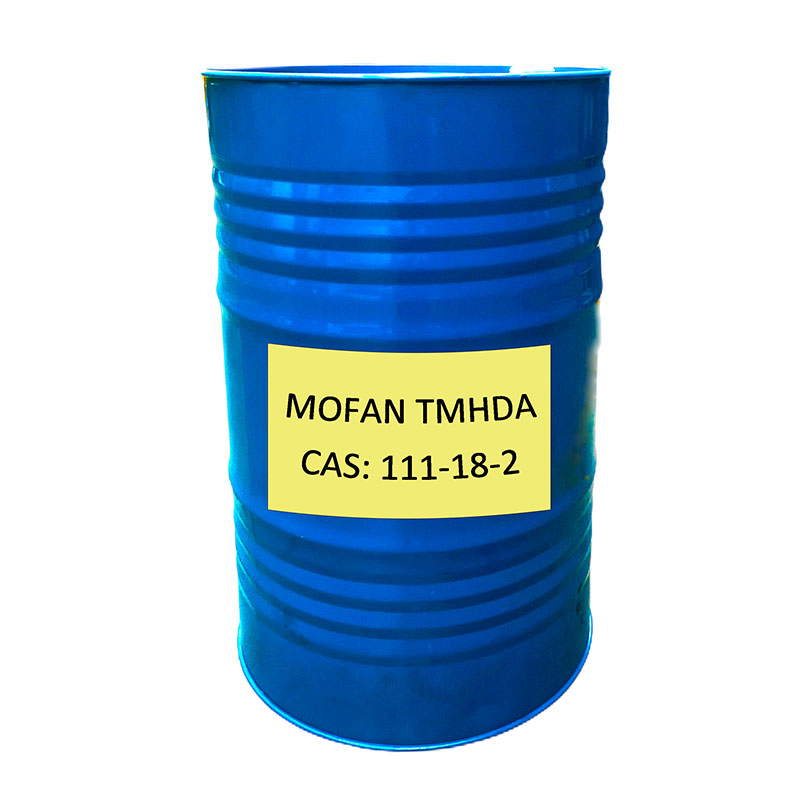
Tetramethylhexamethylenediamine Cas# 111-18-2 TMHDA

  • MOFAN Grade: MOFAN TMHDA
  • Competitor Brand: TMHDA;Lupragen® N500 by BASF, Kaolizer 1,Minico TMHD,Toyocat MR by TOSOH,U 1000
  • Chemical name: N,N,N',N'-tetramethylhexamethylenediamine; [6-(dimethylamino)hexyl]dimethylamine; Tetramethylhexamethylenediamine
  • Cas Number: 111-18-2
  • Molecular fomula: C10H24N2
  • Molecular weight: 172.31
  • Product Detail

    Product Tags

    Description

    MOFAN TMHDA (TMHDA, Tetramethylhexamethylenediamine) is used as polyurethane catalyst. It is used in all kind of polyurethane systems (flexible foam (slab and molded), semirigid foam, rigid foam) as a well-balanced catalyst. MOFAN TMHDA is also used in fine chemistry and process chemical as building block and acid scavenger.

    Application

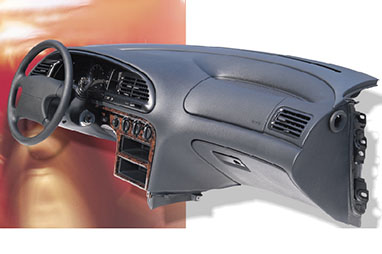
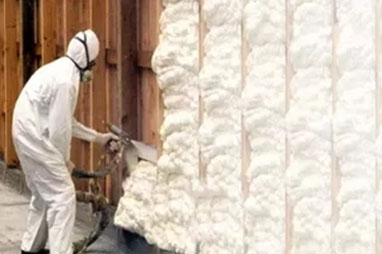
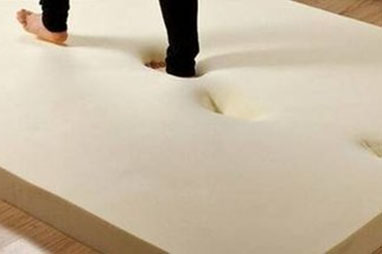
    MOFAN TMHDA is used in flexible foam (slab and molded), semi rigid foam, rigid foam etc.
    MOFAN A-9903
    MOFANCAT T002
    MOFANCAT T003

    Typical Properties

    Appearance Colorless clear liquid
    Flash Point (TCC) 73°C
    Specific Gravity (Water = 1) 0.801
    Boiling Point 212.53°C

    Commercial specification

    Apperance,25℃ Colorless liqiud
    Content % 98.00min
    Water content % 0.50 max

    Package

     165 kg / drum or according to customer needs.

    Hazard statements

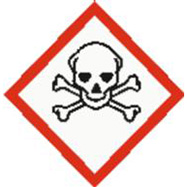
    H301+H311+H331: Toxic if swallowed, in contact with skin or if inhaled.

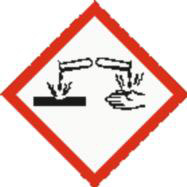
    H314: Causes severe skin burns and eye damage.

    H373: May cause damage to organs <or state all organs affected, if known> through prolonged or repeated exposure <state route of exposure if it is conclusively proven that no other routes of exposure cause the hazard.

    H411: Toxic to aquatic life with long lasting effects.
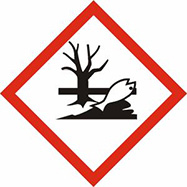
    Label elements

    4
    2
    3

     Pictograms

    Signal word Danger
    UN number 2922
    Class 8+6.1
    Proper shipping name and description CORROSIVE LIOUID,TOXIC, N.O.S. (N,N,N',N'-tetramethylhexane-1,6-diamine)

    Handling and storage

    Precautions for safe handling
    Ensure thorough ventilation of stores and work areas. Product should be worked up in closed equipment as far as possible. Handle in accordance with good industrial hygiene and safety practice. When using do not eat, drink or smoke. Hands and/or face should be washed before breaks and at the end of the shift.

    Protection against fire and explosion
    The product is combustible. Prevent electrostatic charge - sources of ignition should be kept well clear - fire extinguishers should be kept handy.
    Conditions for safe storage, including any incompatibilities.
    Segregate from acids and acid forming substances.

    Storage stability
    Storage duration: 24 Months.
    From the data on storage duration in this safety data sheet no agreed statement regarding the warrantee of application properties can be deduced.

    FAQ

    I need a catalyst that can react into the polymer backbone to reduce VOC. Is TMHDA suitable?

    Yes, TMHDA has primary amine groups that react with isocyanate, chemically bonding into the polyurethane.

    My epoxy casting compound has bubbles trapped after cure. How can TMHDA help?

    Its lower viscosity and good air release properties reduce mechanical entrapment; use 2–3 phr as co-curing agent.

    Can TMHDA improve adhesion of PU adhesives to difficult substrates like PET or nylon?

    Yes, the long aliphatic chain enhances wetting and flexibility, improving peel strength.

    What is the typical use level of TMHDA in a transparent polyurethane encapsulant?

    0.5–1.5 phr based on polyol; it does not cause significant discoloration.

    My polyurethane grout has poor compressive strength. How to enhance it?

    Add TMHDA at 0.3–0.5 phr to increase crosslinking density without making the grout too brittle.

    Can TMHDA be used as a chain extender as well as a catalyst?

    Yes, its secondary amine ends react with isocyanate, acting as a moderate chain extender.

    How do I formulate a zero-amine-emission flexible foam for medical bedding?

    Use TMHDA as the sole amine catalyst because it chemically reacts; no post-emission occurs.

    My two-component PU sealant cures too slowly in cold weather. What dosage of TMHDA works?

    Increase to 0.8–1.2 phr; it effectively lowers the activation energy at 5–10°C.

    Does TMHDA affect foam color in white-colored rigid foam?

    Minimal, but avoid high concentrations (>1.5 phr) as slight yellowing may appear after prolonged heat aging.

    Can TMHDA replace 33-LV in a low-VOC formulation?

    Partially; you need to supplement with a blowing catalyst like MOFAN A-99 to maintain rise profile.


  • Previous:
  • Next:

  • Write your message here and send it to us

    Leave Your Message