MOFAN

products

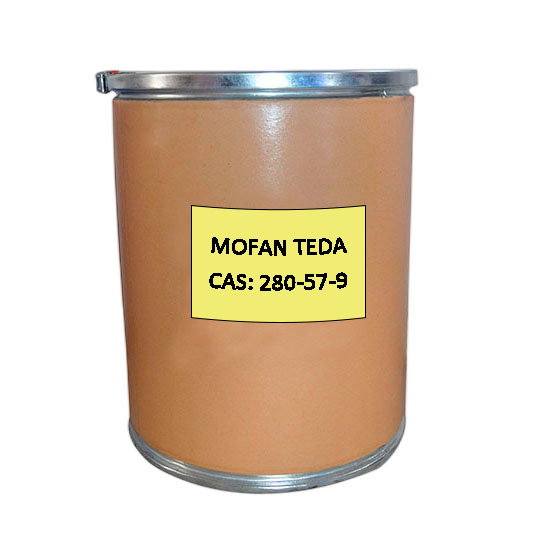
Triethylenediamine Cas#280-57-9 TEDA

  • MOFAN Grade: MOFAN TEDA
  • Competitor Brand: TEDA; Crystal by Evonik;JEFFCATTD-100 by Huntsman;TOYOCAT TEDA by TOSOH
  • Chemical name: Triethylenediamine; 1,4-diazabicyclooctane
  • Cas Number: 280-57-9
  • Molecular fomula: C6H12N2
  • Molecular weight: 112.17
  • Product Detail

    Product Tags

    Description

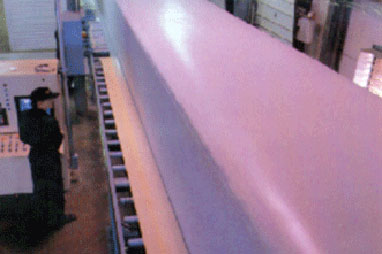
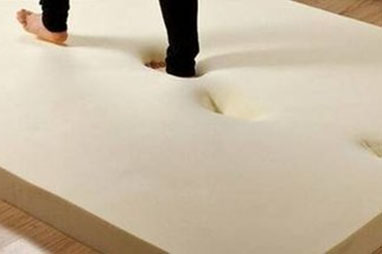
    TEDA Crystalline catalyst is used in all types of polyurethane foams including flexible slabstock, flexible molded, rigid, semi-flexible and elastomeric. It is also used in polyurethane coatings applications.TEDA Crystalline catalyst accelerates the reactions between the isocyanate and water, as well as between the isocyanate and organic hydroxyl groups.

    Application

    MOFAN TEDA is used in flexible slabstock, flexible molded, rigid, semi-flexible and elastomeric. It is also used in polyurethane coatings applications.
    MOFAN DMAEE02
    MOFAN A-9903
    MOFAN TEDA03

    Typical Properties

    Appearance White crystalline or light yellow solid
    Flash Point, °C (PMCC) 62
    Viscosity @ 25 °C mPa*s1 NA
    Specific Gravity @ 25 °C (g/cm3) 1.02
    Water Solubility soluble
    Calculated OH Number (mgKOH/g) NA

    Commercial specification

    Apperance, 25℃ White crystalline or light yellow solid
    Content % 99.50min
    Water content % 0.40 max

    Package

    25 kg / drum or according to customer needs.

    Hazard statements

    H228: Flammable solid.

    H302: Harmful if swallowed.

    H315: Causes skin irritation.

    H318: Causes serious eye damage.
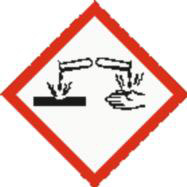
    Label elements

    2
    1
    MOFAN BDMA4

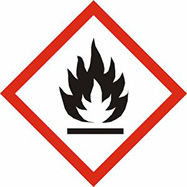
     Pictograms

    Signal word Danger
    UN number 1325
    Class 4.1
    Proper shipping name and description FLAMMABLE SOLID, ORGANIC, N.O.S., (1,4-Diazabicyclooctane)
    Chemical name 1,4-diazabicyclooctane

    Handling and storage

    Precautions for safe handling Avoid contact with eyes. Use personal protective equipment. When using, do not eat, drink or smoke.   Conditions for safe storage, including any incompatibilities Do not store near acids. Store in steel containers preferably located outdoors, above ground, and surrounded by dikes to contain spills or leaks. Keep containers tightly closed in a dry, cool and well-ventilated place. Keep away from heat and sources of ignition. Keep in a dry, cool place. Keep away from Oxidizers.   Technical measures/Precautions Keep away from open flames, hot surfaces and sources of ignition.
    FAQ

    My flexible foam has poor load-bearing capacity. How can TEDA improve it?

    TEDA strongly drives the gel reaction, increasing the polymer modulus and foam hardness at the same density.

    What’s the best way to use solid TEDA in a continuous slabstock line?

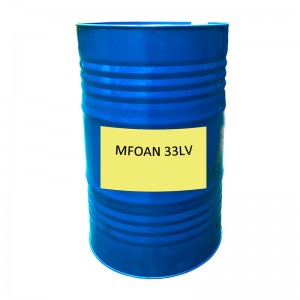
    Dissolve it in DPG (33% solution = MOFAN 33LV) for liquid dosing; solid TEDA can cause clogging in pumps.

    My molded foam has a thick skin and a soft core. How to balance?

    Reduce TEDA by 0.05–0.1 phr and add a little MOFAN A1 to open the cells and soften the skin.

    Can TEDA be used in polyisocyanurate (PIR) laminates?

    Yes, but only as a co-catalyst with a strong trimer catalyst like TMR-30 to avoid incomplete curing.

    I want to speed up demolding in a high-resilience foam formulation. What is the effective TEDA range?

    0.3–0.6 phr (active TEDA) gives demold times of 3–4 minutes at 50–60°C mold temperature.

    Does TEDA cause foam scorching in high-water formulations?

    It can contribute to internal exotherm; keep TEDA below 0.4 phr and use antioxidants.

    How can I reduce the typical “amine” smell in furniture foam without losing activity?

    Use a solution of TEDA in a low-odor solvent like DPG (MOFAN 33LV) and post-cure the foam for 24 hours in a ventilated area.

    My elastomer parts have incomplete cure in thick sections. Can TEDA help?

    Yes, add 0.2–0.4 phr to ensure full cure through the cross-section; it is less sensitive to moisture than tin catalysts.

    Is TEDA compatible with polyether polyols of different functionalities?

    Fully miscible with all standard polyether and polyester polyols; no phase separation.

    What catalyst combination gives the best cost/performance for standard flexible foam?

    Blend of TEDA (0.25 phr) + MOFAN A1 (0.08 phr) is the industry workhorse.


  • Previous:
  • Next:

  • Write your message here and send it to us

    Leave Your Message