MOFAN

products

2-((2-(dimethylamino)ethyl)methylamino)-ethanol Cas# 2122-32-0(TMAEEA)

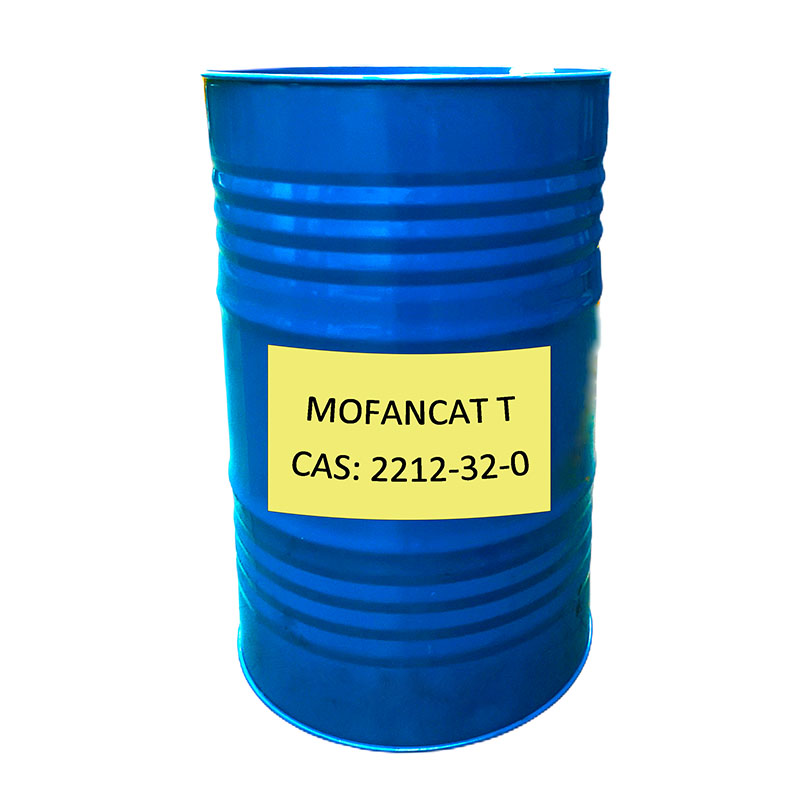
  • MOFAN Grade: MOFANCAT T
  • Competitor Brand : T by Evonik,Toyocat RX5 by TOSOH,Jeffcat Z-110 by Huntsman,TMAEEA
  • Chemical name: 2-((2-(dimethylamino)ethyl)methylamino)-ethanol; N,N,N’-trimethylaminoethylethanolamine; N,N,N'-Trimethyl-N'-(hydroxyethyl)ethylenediamine
  • Cas Number: 2212-32-0
  • Molecular fomula: (CH3)2NCH2CH2N(CH3)CH2CH2OH
  • Molecular weight: 146.23
  • Product Detail

    Product Tags

    Description

    MOFANCAT T is a non-emission reactive catalyst with hydroxylgroup. It promotes the urea (isocyanate - water) reaction. Due to its reactive hydroxyl group it readily reacts into the polymer matrix. Provides smooth reaction profile. Possesses low fogging and low PVC staining property. It can be used in flexible and rigid polyurethane systems where a smooth reaction profile is required.

    Application

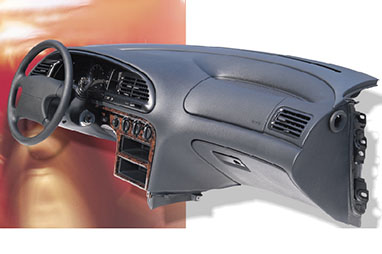
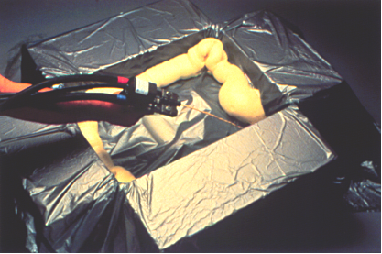
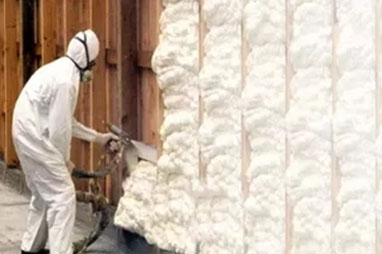
    MOFANCAT T is used for spray foam insulation, flexible slabstock, packaging foam, automotive instrument panels and other areas where a catalyst providing low residual odor or non-migrating performance is required.
    图片1
    MOFANCAT T003
    MOFANCAT T002
    MOFANCAT T001

    Typical Properties

    Apparence: colorless to light yellow liquid
    hydroxyl value (mgKOH/g)

    387

    Relative density(g/mL at 25 °C):

    0.904

    Viscosity (@25 ℃ mPa.s)

    5~7

    Boiling Point (°C)

    207

    Freezing Point (°C)

    <-20

    vapor pressure (Pa,20 ℃) 

    100

    Flash Point(°C)

    88

    Commercial specification

    Appearance colorless or light yellow liquid
    Purity % 98 Min.
    Water content % 0.5 Max.

    Package

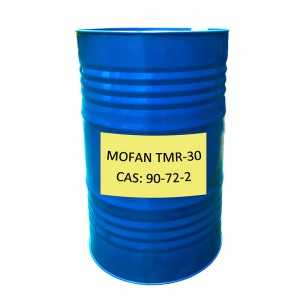
     170 kg / drum or according to customer needs.

    Hazard statements

    H314: Causes severe skin burns and eye damage.
    H318: Causes serious eye damage.
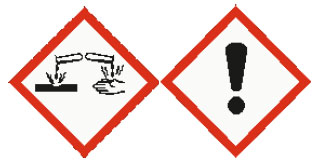
    Label elements

    Label elements

    Pictograms

    Signal word   Danger 
    UN number 2735
    Class 8
    Proper shipping name and description Amines, liquid, corrosive, n.o.s.
    Chemical name 2-[[2-(dimethylamino)ethyl]methylamino]ethanol

    Handling and storage

    Advice on safe handling
    Do not breathe vapours/dust.
    Avoid contact with skin and eyes.
    Smoking, eating and drinking should be prohibited in the application area.
    To avoid spills during handling keep bottle on a metal tray.
    Dispose of rinse water in accordance with local and national regulations.

    Advice on protection against fire and explosion
    Normal measures for preventive fire protection.

    Hygiene measures
    When using do not eat or drink. When using do not smoke.
    Wash hands before breaks and at the end of workday.

    Requirements for storage areas and containers
    Keep container tightly closed in a dry and well-ventilated place. Observe label precautions. Keep in properly labelled containers.

    Further information on storage stability
    Stable under normal conditions.
    FAQ

    My automotive foam fails the fogging test (VDA 278). Which catalyst should I use?

    MOFANCAT T is a low-fogging, low-VOC catalyst that significantly reduces condensate on windows.

    How can I reduce the amount of expensive tin catalyst in a high-resilience molded foam?

    Use MOFANCAT T (0.2–0.4 phr) as a co-catalyst; it can cut tin levels by 40% while maintaining cure speed.

    I want to produce a flexible foam with a very soft feel but good recovery. What dosage works?

    0.1–0.2 phr together with a mild blowing catalyst; the reactive nature of MOFANCAT T prevents surface tack.

    Does MOFANCAT T work in polyurethane integral skin foam for steering wheels?

    Yes, it provides uniform cell structure and a smooth skin without surface defects.

    My spray foam formulation has poor adhesion to metal after cold storage. How can CAT T help?

    Its reactive OH group increases adhesion by bonding to the metal surface through hydrogen bonding or chemical interaction.

    Can MOFANCAT T be used in epoxy systems as an accelerator?

    Yes, it works as a tertiary amine accelerator for epoxy-anhydride and epoxy-amine systems, especially at elevated temperatures.

    What is the typical shelf life of a polyol blend containing MOFANCAT T?

    At least 6 months in a sealed container under nitrogen; it is less reactive with polyols than strong primary amines.

    How do I formulate a low-emission polyurethane elastomer for food contact applications?

    Use MOFANCAT T as the sole catalyst; after post-curing (80°C for 16h), extractables are below FDA limits.

    My foam has a rough top surface (collapse). Can MOFANCAT T fix this?

    Increase it by 0.05 phr to slightly boost the gel strength before the blow reaction completes.

    Is MOFANCAT T compatible with phosphate-based flame retardants?

    Yes, it does not catalyze side reactions with phosphates, unlike some strong base catalysts.


  • Previous:
  • Next:

  • Write your message here and send it to us

    Leave Your Message