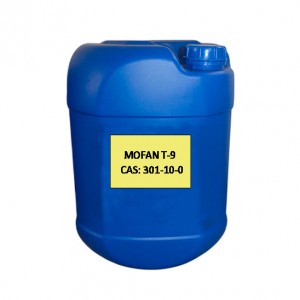


Dioctyltin Oxide
Dioctyltin Oxide (abbreviated as DOTO), with the brand name MOFAN T2800 and CAS No. 870-08-6, is an organotin compound with high purity and stable chemical properties. It is widely used as a catalyst, heat stabilizer, and crosslinking agent in the polymer, plastic, and chemical industries, especially suitable for PVC processing, polyurethane synthesis, and silicone rubber crosslinking. This product is characterized by excellent catalytic activity, good thermal stability, and low toxicity, meeting international industry standards for related applications.
- PVC Processing: Used as a heat stabilizer and lubricant in PVC products (e.g., pipes, profiles, films, and cables), improving the thermal stability and processing performance of PVC, preventing degradation during high-temperature processing.
- Catalyst: Efficient catalyst for esterification, transesterification, and polycondensation reactions in organic synthesis; widely used in the production of polyurethanes, polyesters, and other polymers.
- Silicone Rubber Crosslinking Agent: Used as a crosslinking agent for room-temperature vulcanized (RTV) silicone rubber, promoting the crosslinking reaction of silicone rubber and improving its mechanical properties and heat resistance.
- Other Applications: Used as an intermediate in the synthesis of other organotin compounds; also used in the production of plasticizers, coatings, and adhesives to enhance product performance.


| Tin content (Sn), % | ≥32 |
| Chlorine (Cl) content, ppm | ≤300 |
| Tin content (Sn), % | 18 ~19.2 |
| Density g/cm3 | 1.04~1.08 |
25kg/drum or according to customer needs.
H371 May cause damage to organs

Pictograms
| Signal word | Warning |
Not regulated as dangerous goods.
Handling Precautions
- Handle in a well-ventilated area, preferably in a fume hood, to avoid inhalation of dust or vapors.
- Wear appropriate personal protective equipment (PPE), including chemical-resistant gloves (nitrile or neoprene), protective clothing, eye goggles, and a particulate respirator (N95 or higher) when handling.
- Avoid contact with skin, eyes, and clothing. Do not eat, drink, or smoke in the handling area. Wash hands thoroughly with soap and water after handling.
- Use non-sparking tools and equipment to avoid generating dust or sparks during handling.
- Avoid mixing with strong oxidizing agents, strong acids, or strong bases to prevent chemical reactions.
Storage Conditions
- Store in a cool, dry, well-ventilated warehouse or storage area, away from heat, sparks, open flames, and direct sunlight.
- Recommended storage temperature: 5 - 30 °C. Avoid temperatures above 35 °C to prevent decomposition.
- Keep the container tightly closed when not in use to prevent moisture absorption, dust contamination, and oxidation.
- Store separately from incompatible materials (strong oxidizing agents, strong acids, strong bases, food, feed, and pharmaceuticals).
- Store in a locked area to restrict access to authorized personnel only. Label the container clearly with the product name, CAS number, and hazard warnings.