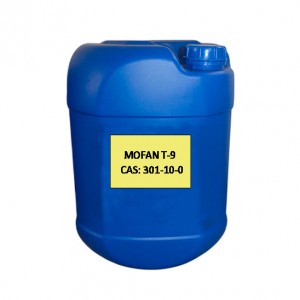
MOFAN

products

Tin(2+) neodecanoate

  • MOFAN Grade:: MOFAN T-900
  • Competitor Brand:: T-900
  • Chemical name:: Tin(2+) neodecanoate
  • Cas number:: 49556-16-3
  • Product Detail

    Product Tags

    Description

    MOFAN T-900 acts as a stannous octoate replacement metal catalyst. Offers uniform activity and similar usage
    levels as well as material handling to stannous octoate. It can be used with conventional metal-based co-catalysts, as
    well as with traditional tertiary amine or non-fugitive amine catalysts.

    Application

    MOFAN T-900 is recommended for use in waterblown, CO2-blown or other alternative blowing agent TDI or TDI/MDI slabstock polyurethane foam systems.
    MOFAN T-900 can be diluted by polyols, like at a ratio of 1:10. Such premixes should be used up quickly, preferably within the same day.
    Recommend use level of MOFAN T-900 are in the range of 0.1 to 0.3 pphp in standard ether foam and in the range of 0.1 and 0.25 pphp in hot cure moulded foams. The optimal concentration will depend on specifics of the formulation and raw material.

    图片25
    图片26

    Typical Properties

    Appearance Light Yellow liquid
    Tin content (Sn), % ≥19
    Viscosity at 25 °C, mPa*s 700

    Commercial specification

    Appearance Light Yellow liquid
    Tin content (Sn), % ≥19
    Viscosity at 25 °C, mPa*s 700

    Package

    25kg/drum or according to customer needs.

    Hazard statements

    May be harmful if swallowed. Causes skin irritation.
    Causes serious eye damage.
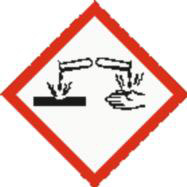
    Label elements

    2

     Pictograms

    Signal word Warning

    Not regulated as dangerous goods.

    Handling and storage

    Provide good ventilation of working area (local exhaust ventilation if necessary). Avoid contact with skin and eyes. Do not inhale gases/vapours/aerosols.
    Keep containers tightly closed in a cool, well-ventilated place. Keep only in the original container.

    FAQ

    I produce flexible foam and want a tin catalyst with better hydrolytic stability than T-9. Is T-900 the answer?

    Yes, stannous neodecanoate is less sensitive to moisture, giving more consistent foam density and fewer splits.

    My polyurethane coating for automotive interiors needs low VOC. How does T-900 help?

    It has lower volatility than T-9 and does not contribute to fogging.

    Can T-900 be used in high-water (6 phr) flexible foam to prevent scorch?

    Yes, its milder activity reduces internal exotherm; use 0.2–0.3 phr together with appropriate antioxidants.

    What is the typical tin content of T-900?

    ~24% tin (stannous); slightly lower than T-9 but more stable.

    My elastomer (castable) has pinholes due to moisture. Will switching to T-900 eliminate them?

    It reduces moisture sensitivity but still requires dry raw materials; degas thoroughly.

    Is MOFAN T-900 suitable for polyurethane sealants used in humid environments?

    Yes, better than T-9 for one-component moisture-cure systems; provides longer shelf life.

    How does T-900 compare to T-900?

    Direct replacement; same activity and stability.

    My high-resilience foam has a slow recovery after compression. Can T-900 improve resilience?

    Only marginally; resilience is more influenced by polyol and isocyanate choice.

    What is the recommended storage temperature for T-900?

    10–30°C; do not freeze; it may crystallize below 5°C; warm to 25°C before use.

    Can T-900 be used in polyurethane rigid foam for continuous lamination?

    Yes, but it is less common; amines and trimer catalysts are preferred; use T-900 at 0.1–0.2 phr as co-catalyst.


  • Previous:
  • Next:

  • Write your message here and send it to us

    Leave Your Message