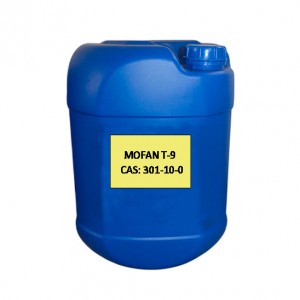


Monobutylstannic Acid (Chlorinated)
Monobutylstannic Acid (Chlorinated) is an amorphous, hydrolysis-stable organotin compound, appearing as white powder or off-white crystalline powder;It is stable in water, slightly soluble in water, soluble in dilute sodium hydroxide (NaOH) or hot nitric acid (HNO₃), and insoluble in non-polar solvents; It is stable under normal temperature and pressure when stored in an inert gas environment, and may decompose when exposed to moisture; It is mainly used as a high-activity catalyst for esterification, transesterification and polycondensation reactions, and also for the synthesis of saturated and unsaturated polyesters, with excellent reaction activity and stability even at high temperatures (up to 250℃)
●Catalyst: Used as a high-activity catalyst in esterification, transesterification and polycondensation reactions, with the advantages of short reaction time, low reaction temperature and high equipment utilization;superscript:5>. It starts to dissolve at 80℃ in acidic reactions without affecting product quality;
●Polyester Resin Synthesis: Suitable for the synthesis of saturated polyester resins for powder coatings, and unsaturated polyester resins for gel coatings, sheets and castings;
●Engineering Resin Production: Used in the production of polybutylene terephthalate (PBT) engineering resins, which are widely used in the automotive and construction markets
●Other Fields: Used in the production of esters and antioxidants through transesterification reactions (suitable for reaction temperatures of 140-180℃)


| Appearance | White powder |
| Purity,% | ≥98 |
| Tin content (Sn), % | 46-50 |
| Density g/cm3 @20℃ | 1.26 |
| Chlorine (Cl) content,% | 13.8-15.2 |
| Tin content (Sn), % | 46-50 |
| Chlorine (Cl) content,% | 13.8-15.2 |
25kg/drum or according to customer needs.
Hazard Statement:
H302 Harmful if swallowed.
H312 Harmful in contact with skin.
H315 Causes skin irritation.
H319 Causes serious eye irritation
H332 Harmful if inhaled.
H335 May cause respiratory irritation.

Pictograms
| Signal word | Warning |
| Not regulated as dangerous goods. | |
Handling Precautions
Operate in a well-ventilated environment, use local exhaust ventilation if necessary to avoid dust flying.
Wear personal protective equipment (N95 dust mask, chemical safety goggles, impermeable gloves, impermeable protective clothing) during operation. The selected protective gloves must comply with EU 89/686/EEC and EN 376 standards.
Handle with care to avoid collision, friction and vibration, and prevent packaging damage and leakage.
Do not eat, drink or smoke in the operation area; wash hands, face and other exposed parts thoroughly with soap and water after operation.
Avoid contact with oxidants, strong acids and strong alkalis during operation to prevent chemical reactions.
Seal the container immediately after use to reduce contact with air and moisture.
Use dedicated tools and equipment for handling, and clean them thoroughly after use to avoid cross-contamination.
Storage Conditions
Store in a cool, dry, well-ventilated warehouse, away from fire sources, heat sources and direct sunlight; the storage temperature should be 0-30℃.
Store in an inert gas environment (such as nitrogen) to avoid decomposition caused by contact with air and moisture.
Keep the container tightly closed, and the storage place must be locked to prevent unauthorized access.
The relative humidity of the storage environment should be ≤75%, avoid moisture and dampness (moisture may cause decomposition).
Store separately from oxidants, strong acids, strong alkalis, food, beverages and feed to avoid cross-contamination. Use separate storage areas and shelves.
Shelf Life: 1 year under proper storage conditions; expired products need to be re-inspected and can be used only if they are qualified.
Label the storage area clearly with hazard signs and safety precautions.